Canadian Retail Merchandising Innovator: How Nature’s Bounty Wins Through Planogram Control and Consistency
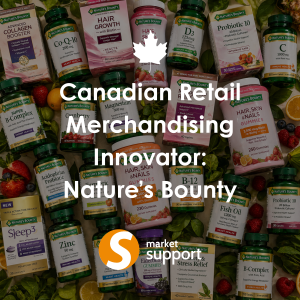 In many areas of consumer packaged goods, innovation is often associated with disruption. New product formats, bold branding strategies, and attention-grabbing campaigns tend to dominate the conversation. While those elements can be effective in certain categories, there are others where success is driven by a very different set of principles. The vitamins and supplements category is one of them.
Within Canadian retail, this category operates under a unique set of conditions that place a premium on consistency, trust, and ease of navigation. Consumers are typically not browsing for entertainment or discovery. They are shopping with intent, often looking for specific products that align with established routines or health goals. In this environment, the role of merchandising shifts from attracting attention to facilitating efficient decision-making.
This is where Nature’s Bounty stands out as a Canadian retail merchandising innovator. Rather than attempting to disrupt the category through aggressive reinvention, the brand has built its success on mastering the fundamentals of retail execution. Through disciplined planogram positioning, consistent availability, and a deep understanding of customer behavior, it has created a presence that is both highly visible and highly reliable.
To understand the effectiveness of this approach, it is important to first examine how the vitamins and supplements category is structured in Canadian retail. Unlike impulse-driven categories such as snacks or beverages, supplements are typically organized in a more systematic way, often within designated health sections in grocery stores or within pharmacy environments such as Shoppers Drug Mart. Products are grouped by function, such as immune support, heart health, or general wellness, and consumers navigate these sections with a specific objective in mind.
In this context, the planogram becomes a critical tool. It determines not only where products are placed, but also how easily they can be found and compared. A well-executed planogram reduces friction, allowing consumers to locate their preferred product quickly and confidently. A poorly executed one introduces confusion, slows down the decision-making process, and increases the likelihood of substitution or abandonment.
Nature’s Bounty has clearly invested in aligning its products with these planograms in a way that maximizes both visibility and accessibility. By maintaining consistent placement within key segments of the category, the brand ensures that consumers know where to find it, regardless of which store they visit. This consistency across locations reinforces familiarity, which is a powerful driver of repeat purchasing behavior.
One of the key advantages of this approach is that it aligns directly with how consumers build habits. Unlike categories where experimentation is common, supplement purchases are often routine. Once a consumer finds a product that works for them, they are likely to repurchase it regularly. This makes availability and consistency far more important than novelty.
Nature’s Bounty supports this behavior by ensuring that its core SKUs are consistently in stock. This may seem like a basic requirement, but in practice it requires a high level of coordination across supply chain, distribution, and retail operations. Forecasting demand accurately, maintaining sufficient inventory levels, and ensuring timely replenishment are all essential components of this process.
The cost of failing to meet these expectations is significant. When a consumer is unable to find a product they rely on, they are forced to make a substitution. In some cases, this may lead them to try a competing brand, which introduces the risk of permanent switching. From the retailer’s perspective, repeated stockouts can signal weak performance, leading to reduced shelf space or delisting.
By maintaining strong availability, Nature’s Bounty mitigates these risks and reinforces its position as a dependable option within the category. This reliability not only drives immediate sales but also strengthens long-term relationships with both consumers and retailers.
Another important element of the brand’s merchandising strategy is its packaging and visual identity. In a category where products are often displayed in dense, information-heavy sections, clarity becomes essential. Consumers need to be able to quickly identify the product they are looking for, often based on a combination of brand recognition and functional labeling.
Nature’s Bounty has adopted a packaging approach that emphasizes clarity and consistency. Key information is presented in a way that is easy to read and understand, and the overall design remains consistent across different products. This makes it easier for consumers to navigate the shelf and locate their preferred items without unnecessary effort.
From a merchandising perspective, this clarity enhances the effectiveness of the planogram. When products are easy to identify, the structure of the shelf becomes more intuitive, which in turn improves the overall customer experience.
Distribution also plays a critical role in supporting this strategy. In order to maintain consistent placement and availability across multiple retail banners, the brand must operate within a distribution framework that prioritizes reliability and efficiency. This includes working closely with retail partners to ensure that inventory levels are aligned with demand and that replenishment processes are executed consistently.
In the Canadian market, where large retailers operate extensive store networks, this level of coordination is particularly important. A breakdown in distribution at any point in the system can lead to gaps in availability, which undermines the consistency that the brand has worked to establish.
Nature’s Bounty appears to have addressed this challenge by building strong relationships with both retailers and distributors, allowing it to maintain a stable presence across a wide range of locations. This consistency contributes to a sense of ubiquity, reinforcing the brand’s position as a reliable choice within the category.
What makes this approach particularly effective is that it aligns with the underlying psychology of the consumer. In categories related to health and wellness, trust plays a central role in decision-making. Consumers are often cautious about switching products, especially if they have found one that meets their needs. This creates an opportunity for brands that can establish themselves as consistent and dependable options.
Nature’s Bounty leverages this dynamic by focusing on reliability rather than disruption. By delivering a consistent experience across stores, maintaining availability, and reinforcing clear positioning, it builds trust over time. This trust translates into repeat purchases, which are the foundation of long-term growth in the category.
For other CPG brands, particularly those operating in similar categories, there are several important lessons to take away from this approach. The first is that merchandising strategy must be aligned with category behavior. What works in impulse-driven environments may not be effective in routine-driven ones, and vice versa.
The second is that consistency should be treated as a strategic priority rather than an operational afterthought. This includes not only maintaining inventory levels, but also ensuring that product placement, packaging, and positioning remain stable over time.
The third is that execution at the store level is critical. Even the most well-designed strategy will fail if it is not implemented consistently across locations. This requires coordination across multiple functions, as well as a commitment to maintaining standards over time.
Ultimately, Nature’s Bounty demonstrates that innovation in retail merchandising does not always come from doing something new. In many cases, it comes from doing the fundamentals exceptionally well and doing them consistently over time.
In a category where consumers value reliability and clarity, this approach creates a significant competitive advantage. By focusing on planogram alignment, availability, and trust, Nature’s Bounty has established itself as a leading example of what effective merchandising looks like in the Canadian market.
For brands looking to strengthen their retail performance, the takeaway is clear. Success is not always about standing out in the moment. It is often about being present, predictable, and easy to find when it matters most.
« Back to Blog